Friday, May 13, 2011

Musical Interlude ~Memory Motel Montage

Yeah,  some days I like the Stones still.  Old habits die hard. 

This is a live performance video montage from the No Security tour, 1997; the Rolling Stones with Dave Mathews on supporting vocals.

 The Memory Motel--it's on the ocean, I guess you know it well.


...every woman seemed to fade out of my mind
I hit the bottom and I hit the second time..


That quote should make it evident that Keith Richards  co-wrote the song above. He's generally portrayed in popular  culture as a clownish figure of fun and wastrel drug addict. He may be all of that, and more, but the fact remains that not only is he the sodden inspiration for Cap'n Jack Sparrow, but the self-effacing backbone guitar and musical leader of the band, and the writer behind every song that powered the Stones (in conjunction with the equally talented but rather more...flamboyant Jagger, of course.)  From wikipedia: "Richards has frequently stated that he feels less like a creator than a conduit when writing songs: 'I don't have that God aspect about it. I prefer to think of myself as an antenna. There's only one song, and Adam and Eve wrote it; the rest is a variation on a theme."


The song below shows what kind of juice the man has as a songwriter, I think. From the 1969 album, Let it Bleed: You Got The Silver

hey babe, what's in your eyes? I saw them flashing
like airplane lights..

Tuesday, May 10, 2011

Liar's Moon

The Wounded Angel - Hugo Simberg


Liar's Moon

I sit and watch your brushstroke of back expanding,
spreading out on the canvas in the wash of
endless days to come til there is only black blurr;
no memory thrumming in the ears,
not even a dead tear’s salt lick on the cheek.

You may have taken off your eyes, but that hasn’t
stopped you seeing in nightmares, dim shapes of
you, forever dancing to the irresistible song of  the knife,
me, the ghosted wormbitch, pale and passive,
hiding poison in a soft smiling mouth

split with sour pink grapefruit lips, astringent and
stinging wet, dripping worm words of false
agreement, appeasement, as she rolls her swollen white
corpus over, bleached and boneless belly up,
while still she spits green bile.

Or do you not look back
because you see the sadness of yourself, us both
mounted on the void like feathered lepidoptera, forgotten ciphers
trailing across the velvet sky of memory,
the falling embers of  burned angels.

It’s a liar’s moon tonight anyway,
showing nothing anyone would want
to see, just that dead-branched dark grove
where nothing holy ever stood
no goddess laughed or wept,

where even the pythoness recoils
on her bed of smoke and  broken glass
from shattering out words
in streams of darkness, and the lamia won’t stop
licking neurotically at the bloodless wound.

Burnt wings flutter the air ringing with
your voice, your laugh receding,
gone where eggshells and first feathers go;
If you have any choice
I would rather not be that worm; let me be

just an unplanted field, some wide beach of poppies
and birdsong, or mist with a river, where
inside the insect whir of summer, a naiad’s wraith
turns like a leaf in the turquoise wind
that blows from oblivion.


May 2011


Posted for OneShotWednesday at the inimitable OneStopPoetry


Image: The Wounded Angel, Hugo Simberg, 1903


Monday, May 9, 2011

Front Man


Front Man


Every power needs a front man
someone blameless, bright and shining,
a stooge who’ll never quite understand
how he’s used  for pocket lining,
the place he fills in the master plan.

It's essential he speak with charm as he preaches
from a  humble soapbox in the village square.
It stuns the crowd if he gives up his riches
or sometimes shaves off all his hair.
While standing up to the scapegoat leeches,

he should radiate upstanding prelate,
woman’s fancy and man’s self-dream.
It helps if sour milk suits his palate
better than  lobster stewed in cream,
his rhetoric smooth as threadbare velvet.

Above all he must seem pure and sincere
strong and innocent, honest in belief,
for that’s what it takes to front the career
of the invisible, guileful, controlling thief
who mints gold from blood and rules through fear.

May 2011


With apologies to St. Francis, for whom I have the highest respect. This photo  just happened to spark a train of thought that has more to do with politics than religion.


and also for

OneStopPoetry Form, A Look at Rhyme

I've tried to include a variety of different types of rhyme in this poem, with at least one 'perfect rhyme' per stanza and the others a mix of feminine and slant rhyme. Gay please critique this aspect as you see fit.


Uncredited Image provided by Magpie Tales
removed

Sunday, May 8, 2011

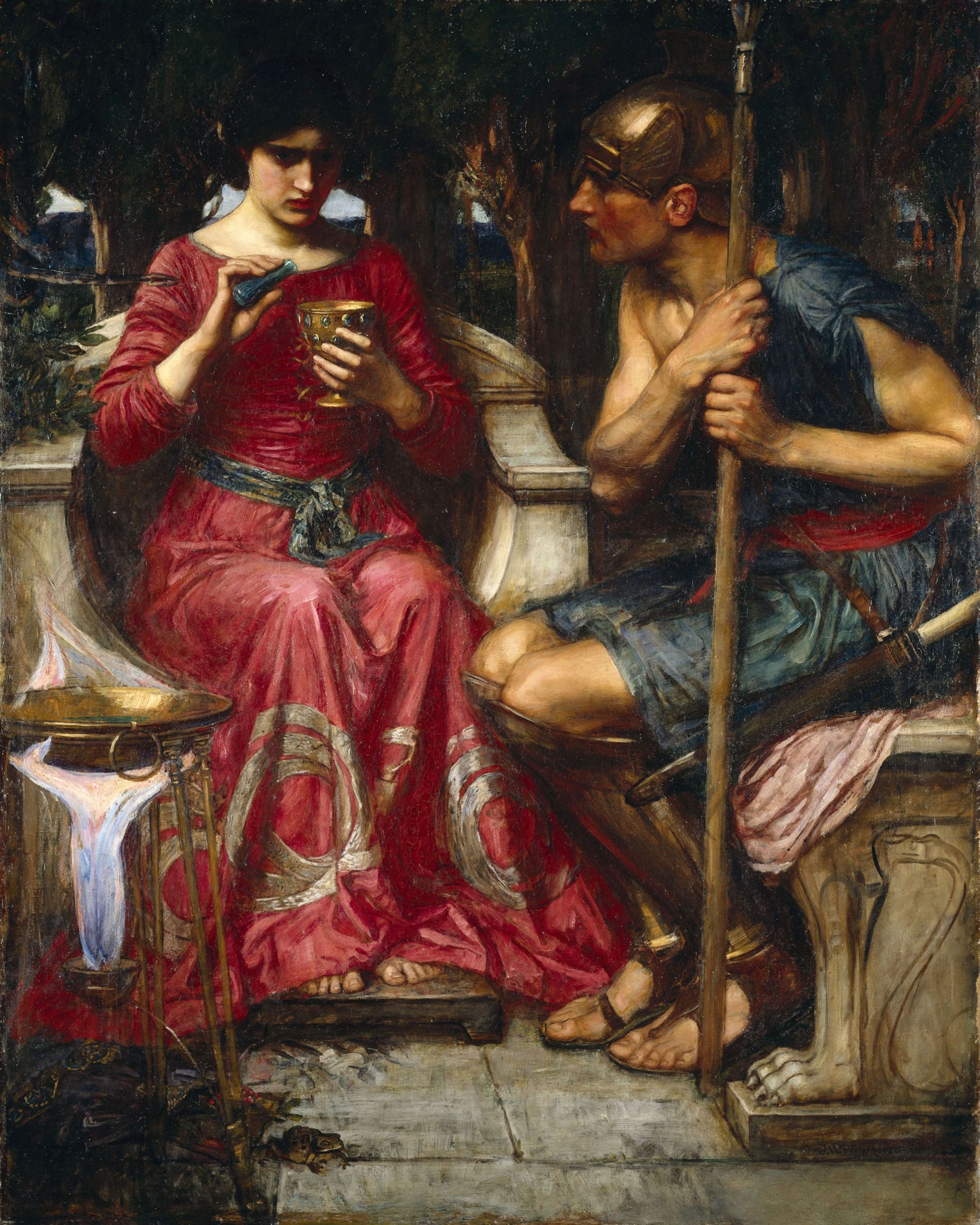
Medea

For those who might feel the tale below is too dismal for this day, here is also a triolet lullaby:

Medea’s Cradlesong

So sleep my babes, and dry your  eyes
for yesterday’s gone and tomorrow’s not here
you’ll dream of frogs and honey pies
so sleep my babes and dry your eyes
just hear the bird that sings as it flies
I promise to keep you safe from all fear
so sleep my babes and dry your eyes
for yesterday’s gone and tomorrow’s not here.


Medea


In her cold bed by the Black Sea's shore
the niece of Circe stirred and felt
her fate, rushing over the wine-red waves.
She slept no more.

The world was still wet in its placental caul
new and vast as the unbordered sky
when she its deep daughter dressed herself
and came to the hall.

The Thief of the Fleece stood proud as the sun
all sweet smiles in a home she must leave
as Eros bid. Her eyes blinked once
and so it was done.

All that tale of love and death
of blood and flight,that was yet to come 
took form there then behind her eyes 
in a final breath.

She beat for him the killing ox,
the drake's quickened teeth. The dragon itself
she charmed  to sleep so the Fleece rode to Greece
between the oar-locks.

They sailed in a darkness rigid and blue,
flickered by death. She cast her spells,
she learned to kill, to make him king
for a year or two.

She poisoned, hexed, foresaw, fought to shore,
bore two strong sons to the Argonaut thief,
knowing he’d leave her as thieves always do  
for a princess whore.

The weapon children she drew from their sheath,
the boys he loved and left behind. 
Their blood was hers as it dripped from the knife. 
Their hair lay soft
as a golden fleece.


May 2011


Posted for One Shoot Sunday at the inimitable OneStopPoetry


Image: Jason and Medea, by John William Waterhouse, 1907
courtesy wikimedia commons


Saturday, May 7, 2011

Off the Shelf Archive ~April

Sadly, the Archivist was much taken up during the month of April with writing a poem a day for National Poetry Month (in company with the talented poets Ami Mattison, Brian Miller, Patricia Caspers, and the inimitable Fireblossom, who all gave tons of support.) Therefore, the page known as Off the Shelf, where  the intriguing works of the mostly Dead Poets I fancy are showcased, was allowed to get quite dusty and neglected. 

But a new month is here, and a new selection makes it's appearance at last. This is a poem I first read in my late teens that made quite an impression on me, a classic of its kind from a writer who's celebrated perhaps more than he's read these days, the great American poet Robert Frost. It's a fey piece called The Hill Wife, and has always been my favorite work of Frost's.

You'll find it here, in the Off the Shelf Archives.

As always, feel free to comment on either the current or prior selection here, as comments are disabled off the main page.

Now, before it goes into the vault of time, here's a last look at the selection that's been sitting on the shelf all April, an excerpt from  The Genie of the Beach, by the Lebanese poet Khalil Hawi, and my review of the book in which it appears translated:


Review:  
Naked in Exile, Khalil Hawi’s The Threshing Floors of Hunger 
 Interpretation and Translation by Adnan Haydar and Michael Beard,  
© Adnan Haydar & Michael Beard, 1984, Three Continents Press. 
All rights reserved.
First, a portion of one of the poems included, Hawi's The Genie of the Beach:


The Genie of the Beach


I.                  Gypsy Tents

That’s All I’ve ever been—a dark-skinned girl
In gypsy tents that have no land, no pegs,
No chattels that impede, that carried by the wind
Sail on beyond the season’s feasting days,
And land on wayward roads from feast to feast.
The wind wipes out the traces that are left
From flames and revels round the gypsy tents.

II.              Mountain Stags and Horses of the Sea

And what has there been incarnate in my flesh
Except the nature of the mellow sand,
The thirsty sand yearning with lusty want
For the outrageous fury of the waves
Which furrow and assault the beaches and the straits?
Will echoes haunt me from their mountain range?
There on the coasts of the primeval snow
The shades of poplar burned my flesh;
Their verdant branches left unveiled
Fermented embers in my depths.

And feverish visions I beheld all day;
Things in the ponds of boiling blood,
Dim shapes in rising steam are veiled,
A raging stag looms into sight,
Rubbing its eyes blood red, routing the herd.
Will I be trampled by the raging stags?
My body moans, it cringes, pants, becomes
Mere fodder, meadows, verdant fields.
The wild mint wallows in the crannied mountain foot,
And in my valleys, groves of pansies throng,

Both frenzied stags in wild abandonment
And horses of the sea surge through the pansied fields,
And galloping they race into the bay
Urged by their frothing mates, thrusting their way along,
Yet there remains within the tender flesh
The mirror's clearness and the glowing tan
Of tranquil rip'ning clusters of the vine,
Trodden by gales, yet unaffected still.

III.           In the City

And in the city’s night, what have I been
Except the harvest feast on threshing floors,
Except the apple of the fertile wild?
I offered of my flesh: blood, wine and bread.
And I beheld with great perplexity
A body plied and squeezed by fetters ten.
What could it feed on but its fever's sweat
To make it shoot and bud and carry fruit?

~Khalil Hawi

Translation © Adnan Haydar and Michael Beard
~from Naked in Exile, Khalil Hawi’s The Threshing Floors of Hunger Interpretation and Translation by Adnan Haydar and Michael Beard,  
© Adnan Haydar & Michael Beard, 1984, Three Continents Press. All rights reserved.

You'll find this poem in its entirety along with several others and a great deal of insightful explanation and critique in Naked in Exile. The book contains three major poems by Hawi, The Cave, The Genie of the Beach, and Lazarus 1962. All are given in both the original Arabic and in English translation, section by section on facing pages.

As far as someone with no knowledge of Arabic can tell,the poems are meticulously and sonorously translated by the authors, rendered in a meter also reconfigured and 'translated' so as to be readily understood  by the Western ear, and then put in an intelligent and complex historical perspective, with additional in-depth but clear and readable analysis and discussion of each, as well as their place in the timeline of Hawi’s life and work unfolding in the period of the Lebanese Civil War. Hawi's own interpretations and introductions are included, and the authors also scrupulously go over and examine existing interpretations of the poems from an assortment of critics, as well as present their own.

Of his suicide, the authors of Naked in Exile  write: " His death was one of very many civilian casualties which accompanied that military occupation. If we single him out, it is because his life work supplies a voice for the many thousand silent victims... Hawi's death is...that of a thinker who wanted nothing better than an opportunity to escape his own pessimism (and who sometimes...succeeded)...[and] who was so totally unequipped with the defenses most of us put into play at the sight of suffering in others that he simply found himself unable to witness such suffering again."

I greatly enjoyed this scholarly and professional work which still manages to so skillfully convey the dark,layered, intensely mystical and lyrical quality of the poetry of Khalil Hawi. It 's available at both Barnes and Noble and Amazon.


Disclosure—I bought and read this book on my own dime and initiative, and received no compensation for this review
 
Bayadir al-ju is the original Arabic title of this collection as used by Hawi for the 1965 Beirut publication.


I wrote more about this selection back in March in this post.


Thursday, May 5, 2011

Friday Flash 55 ~ Moonlight

Caspar David Friedrich - Zwei Männer in Betrachtung des Mondes


Moonlight


Shining moon
hung in the mind’s eye
bright mirror
reflecting
good, evil, nothing, alike,
making amber light.

Nothing seen
in light or darkness
unopened
and unknown
until the blindfold drops that’s
knotted ‘round the heart.

Black night falls
wrapping up the world
random, wild,
insensate,
death, love, loss, joy gallop; but
 see the amber moon.


May 2011

Three linked shadormas
Posted for  Friday Flash 55  at the G-man's


Image: Two Men Contemplating the Moon, by Caspar David Friedrich, circa 1819-20 

Tuesday, May 3, 2011

Fruit Basket

Alfons Mucha - Fruit2


Fruit Basket

When fruit hangs low and
swollen from the bramble,
does it know how many
bright beady eyes
are judging it,
as I know when I see
you narrow your gaze
and cock your
head at my remarks,
refilling my glass?

When fruit ripens
does it feel the sugar rush
to turn it from green to purple,
hard to soft and sweet
as I feel my blood pound through
from red to blue in the chambers
your key waits to unlock,
blushing in the face I cannot
keep secret and thin?

When fruit bursts
spreads out its seed profligate and pithy
dark against the succulent flesh,
does it feel the splitting,
the wet parting of self
into nothing
I feel when you breathe
your dangerous endearments,
your catnip questions
in my ear?


May 2011


Posted for  OneShotWednesday  at the inimitable OneStopPoetry


Image: Le Fruit, lithograph by Alfons Mucha, 1897 
courtesy, wikimedia commons 


Sunday, May 1, 2011

Blood and Sand


Blood and Sand


Blood in the sand where no waters run;
words  grow tall where crops all fail.
God hides behind a burning sun.

Robbers go and robbers come,
centuries turn in the hot wind’s tail;
blood in the sand where no waters run.

The desert eats what the heart’s begun.
Blood is drawn like oil from shale.
God hides behind a burning sun.

The crow will pick when the jackal’s done
and leave the bones to mark the trail;
blood in the sand where no waters run.

Prayers come from the end of a gun.
The dervish whirls and  women wail.
God hides behind a burning sun.

It ends and then it’s just begun.
The crop of words will never fail.
Blood in the sand where no waters run;
God hides behind a burning sun.


April 2011


Photo by Rosa Frei


Posted for OneShootSunday at the inimitable OneStopPoetry

This poem is written in the villanelle form.