Monday, March 7, 2011

Crop Failure


Crop Failure


The summer came and parched the cloves 
The sun beat down, a drum of brass.
Before the locusts came in droves
the summer came and parched the cloves.
They parted then in a blighted grove,
divided, dried to blistered grass.
The summer came and parched the cloves.
The sun beat down, a drum of brass.


March 2011

A triolet.

Posted for Magpie Tales # 56

Also posted for OneStopPoetry Form Monday at the inimitable OneStopPoetry

Sunday, March 6, 2011

American Tragedy


American Tragedy

Act I

Who wrote these lines?
Not Shakespeare, maybe Chekhov,
possibly Gogol. Masks talk:
boys from the fields are told off to war; 
she watches as they come back 
empty or filling a box,
as men  are shot through the head
to take them out of the game. Sees
the blame never come home,
the deck of life stacked
against those who are numbers not
court cards, those who want
life to be more than a broken stage
where darkness casts the parts.

Act II.

A tree painted on canvas
broken lights, a roof
the color of blood in water,
every detritus disguised to
mimic and twist what’s left of the real,
glamored in a flickering blue that hurts her eyes
where shadows  pose and spew words,
grasp but can’t hold, talk but can’t tell,
sell themselves as they buy,
dancing for an illusion to wear, 
a new drug to drink, an idea to disguise
the truth of the blade that probes and removes.
Who wrote these lines? Not Shakespeare.
possibly Miller, maybe Ionesco.

Act III

The last act reprises the first. War
gets another encore, blood falls to the bottom,
a cadaveric lividity reflected as her ruddy cheeks
in a mirror that conceals never reveals.
Darkness is black light, gold is god, difference is crime, 
evil is duty, and all the targets are merged. Masks speak:
O yes be afraid, the enemy is on the coasts, 
taking the capitol, next door. The stage 
is rotten; how long before
people fall through the floorboards
screaming, pulled from the daze of their lives
into the jerking convulsions of 
the sweet poison they swallowed?

Who wrote these lines? Not Shakespeare.
surely not Euripides, possibly Orwell.


March 2011


Posted for One Shoot Sunday at the inimitable One Stop Poetry
Image: The Show Must Go On, by Jacob F Lucas


Tuesday, March 1, 2011

Oxygen Vine Dreamscape


Oxygen Vine Dreamscape


 a voice was singing

Oxygen vine
sweet life of mine
o how you twine
oxygen vine

You began to turn me leaflike
browsing me in slack moments,
a subscription of yours, a pastime.
I saw a skewed wall in a lunatic jungle,
undeciphered petroglyphs
scrawled over by flaming flower graffiti
dark hands of roots, celladon vineshadows,
utterly unreadable

a nonsense song

Oxygen vine
trace me a line
o how you twine
oxygen vine

I was deaf from the reverberations
 of collision when you told me
I was a wall against whose
resistance you built your self, but
I was only flesh behind a  wall
etched with the sigils of an unknown cabal,
 its vines and shadows
become my skin

in the deep night
 
Oxygen vine
black columbine
o how you twine
oxygen vine

Love is a cannibal you explained.
His first goal is to kill and eat the other
then make tuneful bells from the bones.
Just so you grew your tensile intoxicant ribbons in me
so hungry and alive, tickling, strangling
composting accommodating flesh till I was friable ooze
  root-fractured, absorbed into your sucking shoots
flensed down to my skull for a drum

sweet notes pulsing

Oxygen vine
razors in wine
o how you twine
oxygen vine
 
I was wined and twined
cut so quickly
I never knew when my smile lost its lips.
You pierced and numbed me
bubbled my blood out with your own
beads of verdant air, an antagonism of life support
careless of  the red drops’ splash
or my cyanic throat

rattling and humming

Oxygen vine
ventilator’s whine
o how you twine
oxygen vine

Autumn brings a bonfire.
 Dry leaves and twigs burn tinder fast
thorns and flowers flaring farewell
in a temperature that crackles,
twining flames fed hotter
by an inrush of escaping air exploding
black under the lids into
smoke blown like seeds on the wind

vanishing

Oxygen vine
darkness define
your ashen design

into silence

March 2011 


Posted for One Shot Wednesday at the inimitable OneStopPoetry


Photo: Trellised Hand, by joy ann jones, march, 2011

Monday, February 28, 2011

Venus of Brassempouy

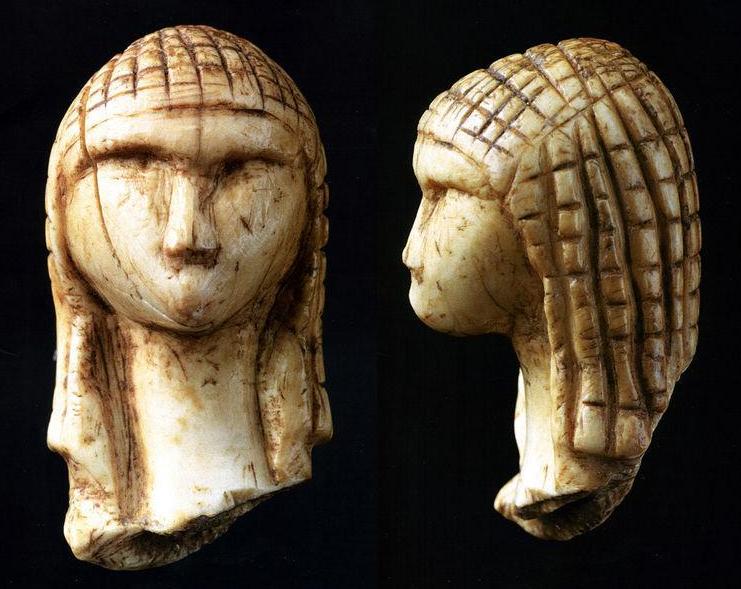
The above figurine was found in a cave in Brassempouy, France in 1892. Known as the Venus of  Brassempouy, she  was carved from mammoth ivory, and  at about 25,000 years old, is one of the earliest known examples of representational art depicting a human face.


Venus of Brassempouy


Neanderthal venus
walks the proto-forest
very carefully.

She has no lipstick
but her lips will be red
as soon as she eats.

Under the furflare of hair
her occipital bun is tidy.

Her berry eyes glow beneath
an artfully ash darkened
supraorbital ridge.

She has a leopardskin miniskirt
and is goin clubbin.

The ferny air is like a gravy
of wet delicious smells.

Soon, she will invent gravy.

 But first she must catch
the makings.

She pauses in a feral crouch
dead in her tracks with a pair of ughs
pulls a fat snail from under a hairy heel.

She has invented h’ors d’oeuvres.

Crunching this gastropodian bonne bouche
between her mandibular prominences,
she scuttles through the underbrush

searching for the ever fragrant
slender and succulent
Cro Magnon man.


February 2011 


Image and information on Venus of Brassempouy courtesy wikipedia and wikimedia commons.


The following music clip is totally optional, and other than containing the refrain 'Cave Woman,' and being as non-serious and possibly offensive as the poem, has nothing to do with the subject. Nonetheless, a casual hearing after many years inspired me to write this, and I can't get it out of my head, so I'm including it as it seems to want to hang out with the piece. (This is all your fault, anonymous person who knows who she is.)


Sunday, February 27, 2011

Musical Interlude~Which Side Are You On?

From wikipedia:
 Alan Lomax, writing in the American Folk Song Book (1968), says "Florence Reece, a shy, towheaded Kentucky miner's daughter, composed this song at the age of 12 when her father was out on strike. She sang it me standing in front of the primitive hearth of a log cabin in the backwoods of Kentucky in 1937 and it has since become a national union song

I hear Peter Yarrow sang this yesterday in Madison. 


So, will you be a lousy scab. or will you be a man?


And for Fireblossom, two versions of Union Maid:


D.C. After Dark


D.C. After Dark

The machine of legend looks like its been on a binge,
listing clackless, hungover and abandoned,
screaming out no more secrets
from its rubbery cylindrical mouth.
It sheds bits of rust with the angry silence
of an old man’s  rheumy tears,
as if in its cancerous steel gut it misses
the caressing fingers of the Famous Beltway Reporter
who once sat here, fueled by tanks of scotch,
fat white cigarettes like obscene stiff worms
leaving their spoor on the scuttling fingertips
pounding the keys with a lover's self-focused delight
crescendoing release on the last page.

For years he covered D.C. after dark.
The pettifogging mooncalves
shysters and snollygosters who
bottomfeed themselves in the salons and dives
came to him first with their reeking tidbits.
He thrived on the unspoken but finally discovered,
followed his nose through the fug of sex and death,
tapped out the authenticated fables of braggadacio
or translations of confessions barely breathed in the dark
as innocents say their soft prayers to a predicated god.
He was inquisitor and thief to those who loved their sins,
smug counters and recounters of their iniquities,
his job to rob the boxes under their beds of guilt and proofs
of potency, strip the skin off their success
and show the bloody emptiness within.

His old Royal was a mad scientist's laboratory
where all the lies and ramblings, all the body parts
of stories were given a blood test, 
filtered through clean white adjectives
administered a shocking phrase
then sealed with tight lines from insider sources
into neat packages to alleviate for some few minutes
the bland boredom of the world.
His choice to make banner headlines
out of ginwhiskered rumors or
lay a blanket of newsprint over cold uncomfortable facts
and put them to bed forever.

Now young blogging upstarts sniff and tap while the
empty wind of words whistles down the internet,
for the Famous Beltway Reporter died
like all the rest, coughing up a lung
and wringing out a bad liver,
clackless, hungover and abandoned,
outlived by his byline, with only the cold
sad truth to sit at his bed and
no one even to inherit his typewriter,
a mumbling derelict forgotten,
passed out under some bridge in the night.


February, 2011


snollygoster: –noun, Slang . a clever, unscrupulous person
~dictionary.com 

Posted for One Shoot Sunday at the inimitable OneStopPoetry


Thursday, February 24, 2011

Friday Flash 55 ~ Spare Change


  Spare Change ~ Two Tankas


I
Dawn to dusk he works
all his life but work’s not done.
Gold’s a slattern wife
hard to keep, easy to steal
always laughing while she cheats.

II
The world is waiting
for signs and comets and change.
Only signs appear
in the hand, flashed on tv.
Change, comets, can’t be written.


February 2011


Image: dragon center jumpingym coins, by Kam TANGO  wikimedia commons

Off the Shelf Archive - February #2

Before the month completely slides past, it's time for one more Off the Shelf poem.

This new selection, The City that Does Not Sleep, by Federico Garcia Lorca, came to my attention earlier this week when I rediscovered it after many years posted on twitter. I read it first during the turbulent '60's and perhaps its message of the insanity of our world is even more pertinent today.

It's now up, here on the Off the Shelf page

Federico Garcia Lorca (1898-1936) was a Spanish poet and dramatist associated with the surreal and avante garde movements of the 1920's, a close friend and collaborator of Salvador Dali and a prolific experimental poet and playwright with leftist leanings and strong ties to the Andalusian culture. He is believed to have been among the many executed by rightist death squads during the Spanish Civil War for his political  views, outspoken writing and homosexuality. Thanks to NellaLou for tweeting this great piece and reminding me of it after many years.


                          ***                       ***                    ***


The previous selection, Sailing to Byzantium by W.B.Yeats, is presented one last time here in the Archive for a final read.

As always feel free to comment on either poem here as comments are disabled off the main page, and also to suggest any favorite poet of your own for next time. You can always access the Archive to view prior selections by clicking on the Off the Shelf Archive tag in the sidebar.


So without further ado, Sailing to Byzantium:


Sailing to Byzantium

I

That is no country for old men. The young
In one another's arms, birds in the trees
- Those dying generations - at their song,
The salmon-falls, the mackerel-crowded seas,
Fish, flesh, or fowl, commend all summer long
Whatever is begotten, born, and dies.
Caught in that sensual music all neglect
Monuments of unageing intellect.

II

An aged man is but a paltry thing,
A tattered coat upon a stick, unless
Soul clap its hands and sing, and louder sing
For every tatter in its mortal dress,
Nor is there singing school but studying
Monuments of its own magnificence;
And therefore I have sailed the seas and come
To the holy city of Byzantium.

III

O sages standing in God's holy fire
As in the gold mosaic of a wall,
Come from the holy fire, perne in a gyre,
And be the singing-masters of my soul.
Consume my heart away; sick with desire
And fastened to a dying animal
It knows not what it is; and gather me
Into the artifice of eternity.

IV

Once out of nature I shall never take
My bodily form from any natural thing,
But such a form as Grecian goldsmiths make
Of hammered gold and gold enamelling
To keep a drowsy Emperor awake;
Or set upon a golden bough to sing
To lords and ladies of Byzantium
Of what is past, or passing, or to come.


William Butler Yeats  1928


Image : Returning Home, by Michael Parkes, 1980